Bring a problem worth solving, imagine a solution, build a product.

Tell Eloom what problem you're trying to solve and who it's for. It defines the requirements, then designs and tests the product. You can see why each design decision was made. The design is only released when all checks pass.

Book a demo

Accounts are by invitation for now. We are hiring and open to investors.

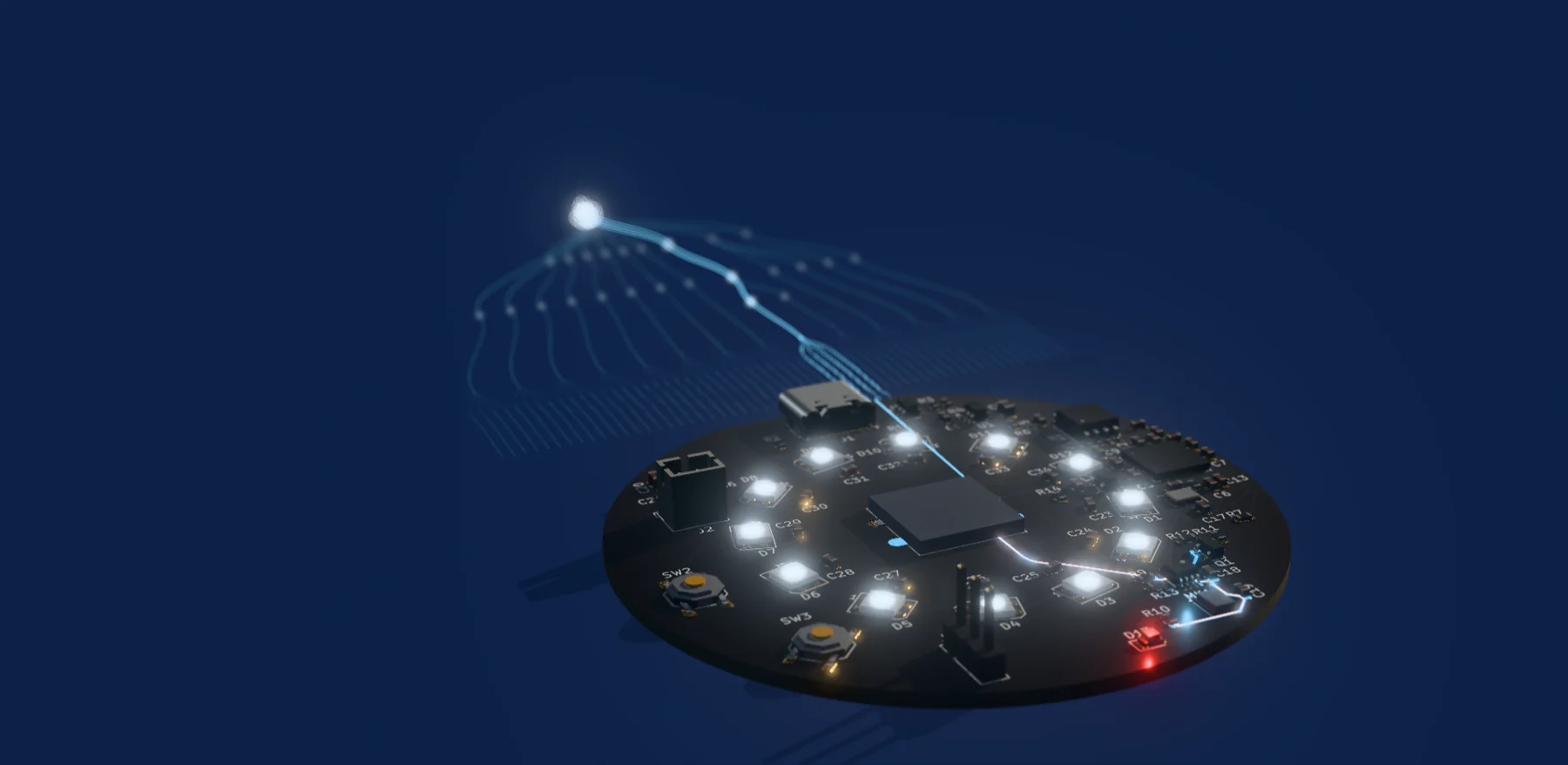
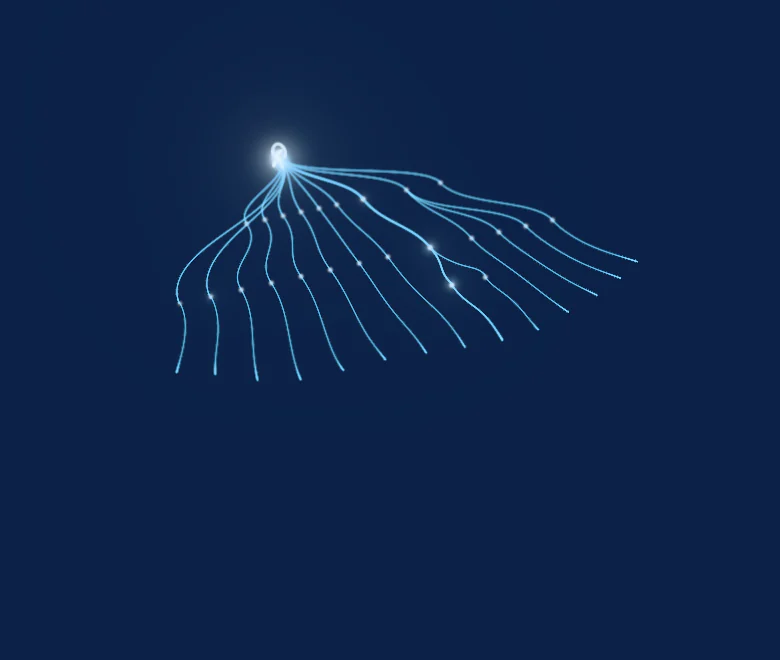
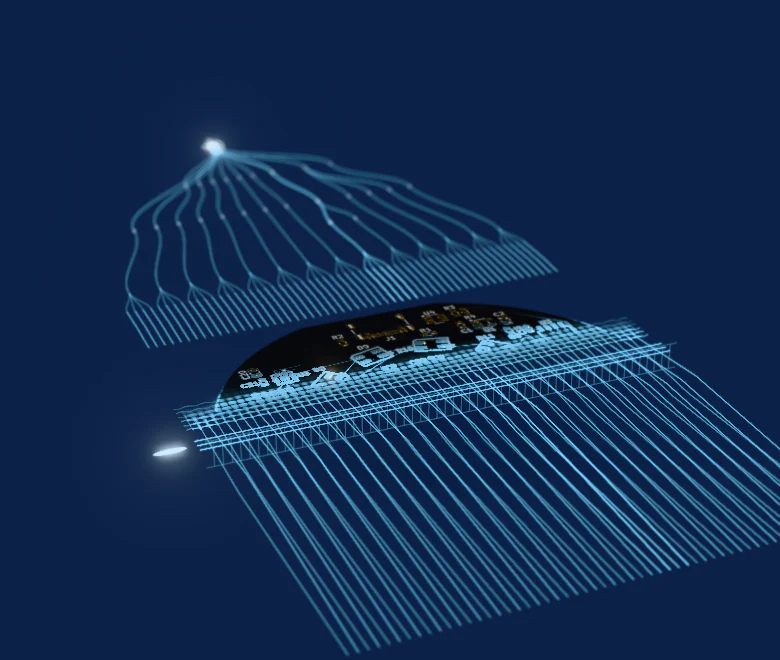
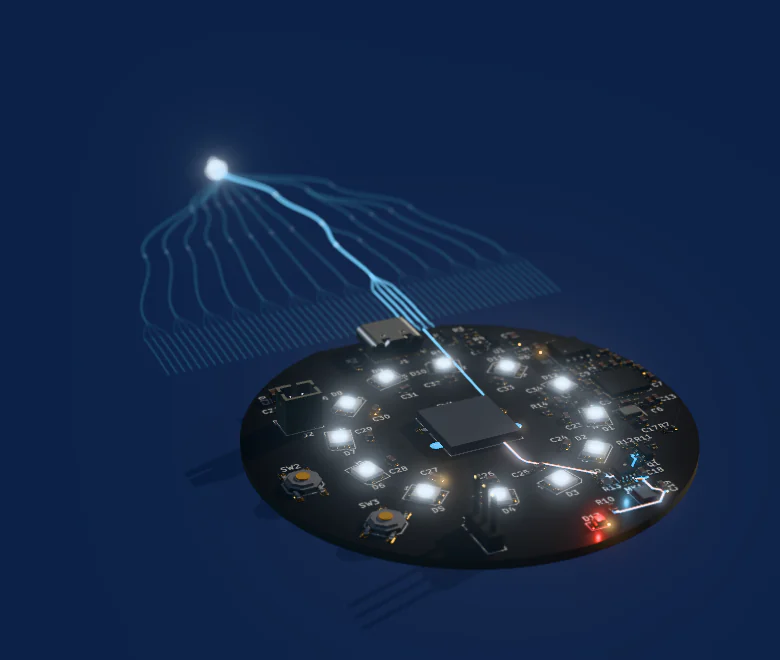
An animation of the Intercom, a desktop device Matrice Technologies is designing in Eloom, woven from its own model. A knot of light, the problem, lets out one thread, which fans into the product's 9 needs; they split into its requirements, which are strung across like a loom's warp. A shuttle weaves across them, and the cloth compacts into the 70 mm circuit board; the threads of the requirements the board meets are pulled taut onto their parts, the microphone's onto its copper, and the 80 parts settle. Then the board is checked: the rule checks pass over it, the button is pressed and power runs along the copper to the microphone and the red on-air light, the simulation's trace draws, and the light runs back up the thread to the need it keeps and the problem it came from. The ring of 12 lights comes on.

Keep intent and execution aligned.

Eloom connects your product's needs and requirements to every component in its design. Checks and tests show whether the design meets them. When engineering uncovers a blocker or a new constraint, you can step in, weigh the trade-offs and revise the requirements.

An animation in three parts. First, the Intercom's files lie apart, as separate documents: the brief, a requirements document, a hazard analysis with 3 rated hazards, the schematic, the board layout, an enclosure drawing (an illustration), the firmware's pin map, a test plan and a simulation report. The microphone's supply, /MIC_3V3, is changed in the schematic, and nothing else changes: the requirements, the board layout, the pin map and the simulation report all still say what they said before. Then the same files move into one repository and are linked through the model: the brief's "Listen when nobody pressed the button" to need N4 and hazard H1, both to safety goal SG1, SG1 to requirement HW1, and HW1 to the board. Last, the same change is made again. The links from the board to SG1, HW1 and PR5, and the electrical rules check, the design rules check and HW1's simulation that examined it, turn suspect. The checks run again: the electrical rules check passes (run bc836ff5), the design rules check finds 0 violations (run 9ab9276e), and in simulation (run 4f901b54) the microphone's supply falls below 1.62 V 0.26 ms after the button is released, within the 50 ms limit. The path from the brief to the evidence is current again.

Eloom keeps the whole product in one repository: the problem and who has it, the needs and hazards, the requirements, every design file and the evidence behind each claim. It checks all of them together on every change, as a compiler checks code. A change shows what it affects, and a release waits until the evidence matches the design again. How the method works

Your engineering design house

Eloom brings together AI agents across systems, safety, electronics, mechanical design, firmware, testing, sourcing and manufacturing. Work alongside a specialist, delegate a task, or give the team a product to develop. Every role works from the same requirements, design and evidence, keeping the work connected across disciplines.

The life of a physical product as one loop, with the Intercom's work at each stage. The problem: systems, and a person decides. Needs, hazards, requirements: systems and safety, and a person accepts the risks. Schematic: electronics. Parts and BOM: electronics and sourcing. Footprints: electronics. Layout: electronics and mechanical. Review: systems and safety, and a person approves. Release: systems. Suppliers: sourcing. Manufacturing: manufacturing. Bring-up: electronics, firmware and test. Validation: test and safety. Iteration: electronics and systems. Release for manufacturing: manufacturing and systems. Firmware runs alongside from the needs and requirements to bring-up: architecture, drivers and application, build and flash, tests. The enclosure runs alongside the board's design and joins it at the review. In the middle is the Intercom's one model, which every role reads and writes: 9 needs, 3 hazards, 15 requirements, 8 blocks. The artefacts are the Intercom's own: the brief's first sentence; need N4, hazard H1 rated S1 E4 C3 and safety goal SG1; the schematic around the button; the parts the pin map names; the footprints; the 70 mm, 4-layer board; the checks (electrical rules 0 open, 1 excluded, with its reason; design rules 0 violations); the files at commit 9cb6430; the cost target, under 25 eur to build at 1,000 units; the pin map; and HW1's simulation, where the microphone's supply falls below its threshold 0.26 ms after the button is let go, within 50 ms. The enclosure and the manufacturing panel are drawings. An iteration sends the design back round the loop; the release for manufacturing leaves it, toward the factory.

You choose where to contribute and what to delegate. Bring your expertise to a design decision, review the work as it develops, or focus on defining what the product needs to achieve. Eloom carries out the engineering work and records the reasoning and evidence behind each decision.

Turn the lights on whenever you want.

Eloom's agents carry out the engineering work, recording the decisions, changes and test results as they go. The record connects what the product must do to how it is designed and the evidence behind it.

Trace a component back to its requirements. Examine why a design decision was made. See what was tested, what passed and what still needs verification. Eloom is built so that you, your reviewers and certification bodies can audit the work.

Intercom Evidence for SG1

Drawn from the record at commit 9cb6430 of matrice-technologies/intercom

NeedN4

Know that nothing hears me unless I hold the button, whatever software the box or my computer runs

Stated by the user

HazardH1

The box hears and sends on what the user or someone nearby says while nobody holds the button

S1 E4 C3

Safety goalSG1

Nothing the box's microphone picks up reaches the computer while nobody holds the button; within 50 ms of the button's release the box sends nothing more

Refines N4, mitigates H1. Refined into HW1 and FW1.

RequirementHW1

The microphone is powered through the button's contact, so with the button released it has no power, whatever the firmware does

Refines SG1. Met by the board.

Designboard

The /MIC_3V3 net, from the button contact SW1 to the microphone MK1 and the on-air light D13.

SW1button contactMK1microphoneD13on-air light

Evidence

Electrical rules check, schematic

  • ea481a834d3a70e1 warning at U6 pin 17, not passed
  • intercom#8a31d4a4Exclude the one explained ERC warning: U6's exposed pad on GND
  • bc836ff59cb6430Passed, 0 open, 1 excluded

Design rules check, board layout

  • 9ab9276e9cb6430Passed, 0 violations, 0 unconnected

Simulation of HW1

  • 4f901b54f2839390.26 ms after the button's release, the microphone's supply is below 1.62 V. Limit 50 ms.
50 ms1.62 Vrelease

Files at 9cb6430, SHA-256

  • brief8ac337a76ec7
  • modelb016345edba6
  • schematica6b32ad44180
  • board layoutbce259cf6036
  • pin mapac4fddc99794

See how Eloom works

Tell us what you're building. We'll show you how Eloom works with a similar product.

We're hiring

Founding hardware engineer, founding software / AI engineer and firmware engineer.

See the open roles

Investors

Talk to Matrice Technologies, the company building Eloom, about investing.

Why we're building Eloom